Fabrication Tips to Prevent Crevice Corrosion

Corrosion resistance charts are a great resource to use to find suitable alloys for a given chemical service. However, pay attention to the footnotes and read supporting literature as well, because those corrosion charts are really only reflecting general corrosion with the posted numerical values. One of the other types of corrosion that needs to be considered is crevice corrosion.
Fabrication

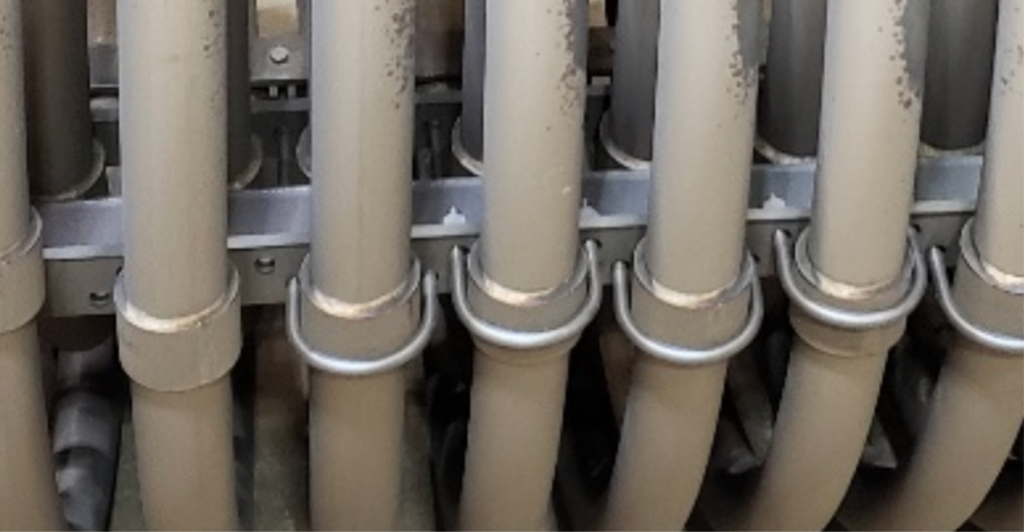
Figure 1 An immersion coil in Tricor’s shop for repair. There are many potential places for crevice corrosion in this design, like where the tubes contact the support beams and the u-bolts around the tubes.

Crevice corrosion is a localized form of corrosion that occurs when a corrosive fluid becomes trapped in the crevices, cracks, or joints of metal surfaces or under deposits. Crevice corrosion initiates in these confined spaces, where the access of oxygen and other oxidants is limited. The presence of stagnant conditions, often caused by capillary forces, allows for the accumulation of corrosive agents within the crevice. Over time, the passive layer, which normally protects the metal from corrosion, can be compromised due to the restricted supply of oxygen and the accumulation of aggressive substances.

There are some important fabrication techniques that can help prevent or reduce crevice corrosion:

  • Avoid Overlapping Joints: Overlapping joints can create crevices where corrosion
    may initiate. Whenever possible, use butt joints to minimize gaps.
  • Use Continuous Welds: Specify continuous welds instead of spot or stitch welding to reduce the chances of crevice formation.
  • Design to Eliminate Crevices: Design components to avoid features that could trap
    fluids or debris, such as sharp corners or tightly fitting parts.
  • Ensure Good Weld Quality: Make sure that welded joints achieve full root
    penetration and avoid undercuts or cracks.
  • Minimize Complex Weldments: Simplified designs reduce the risk of creating small, inaccessible spaces where crevices can form, improving weld quality overall.
  • Avoid Stagnant Zones: Ensure that the pressure vessel design avoids areas where fluids could become stagnant, as this is a primary factor in crevice corrosion. This can include ensuring proper drainage and avoiding dead zones in the design.

If crevices are unavoidable, another approach is to upgrade to a more corrosion resistant alloy in those areas. For example, titanium Grade 7 is generally more resistant to crevice corrosion compared to Grade 2. So, on a titanium Grade 2 vessel design, Grade 7 material can be used in areas where at risk for
crevice corrosion:

  • Grade 7 material for lap rings/stub ends on all body flange and nozzle connections.
  • Grade 7 filler metal in all process-wetted Grade 2 vessel weld joints.
  • Grade 7 material for all vessel internals that have crevices where process fluid may sit or
    become stagnant.

By integrating these fabrication practices, the risk of crevice corrosion in pressure vessels can be significantly mitigated, ensuring long-term reliability and safety of the equipment.

Tricor Metals invites you to join us at the 3rd Materials Technology Institute Global Symposium on Feb 25-28, 2024 in Baton Rouge

Tricor Metals invites you to join us at the 3rd Materials Technology Institute Global Symposium on Feb 25-28, 2024 in Baton Rouge. We will be giving 3 of the almost 40 technical presentations and also be available for discussions at a booth in the exhibit hall. Please review the brocure attached.

MTI is a technical organization that sponsors interactive meetings worldwide bringing engineers and subject matter experts (SME’s) together to answer technical questions and solve technical problems. MTI also sponsors research projects to solve technical issues that are prevalent in the chemical industry. Tricor Metals has been a proud member of MTI for over 14 years and actively participates in all of the MTI meetings in North America.

As a Producer Company representative, you can receive a discounted registration (see brochure attached) that gives you access to all of the presentations and exhibit hall, plus an opportunity to interact with technical experts from all over the Chemical Process, Mining and Refining Industries.

To register, contact MTI at 314-567-4111 or www.mti-global.com . For more information, contact Materials Technology Institute or Chuck Young at Tricor Metals – 330-264-3299 x 2500 or cyoung@tricormetals.com .

We look forward to seeing you at the Symposium in February 2024.

Probe Blazes New Record For The Fastest Thing Ever Made by Humans

Space


Falling through the Solar System at an astonishing 635,266 kilometers (394,736 miles) per hour, NASA’s Parker Solar Probe has just smashed the record for fastest object ever to be created by human hands.

Parker Solar Probe’s 17th orbit brought the spacecraft within 7.3 million kilometers of the Sun. (NASA/Johns Hopkins APL/Steve Gribben)

The event on September 27 marks the turning point of the mission’s 17th loop around the Sun as it collects data on the heated winds of charged particles and violent magnetism that surround our closest star, and comes just under three years after its previous record of 586,863.4 kilometers (364,660 miles) per hour.

At these speeds, it’d be possible for an aircraft to circumnavigate our planet roughly 15 times in a single hour, or zoom from New York to Los Angeles in just over 20 seconds.

Not only is it a record speed, it’s also a record proximity to the Sun – just 7.26 million kilometers above the radiant ocean of plasma we think of as the star’s surface.

Given the Sun is just under 1.4 million kilometers across, this would be akin to standing several respectable paces away from a blazing campfire. Near enough to smell the smoke but not so close that your nose hairs singe.

Achieving such incredible feats wasn’t the result of powerful propellants (at least, not entirely), but more a consequence of a perfectly-timed game of cosmic mini-golf.

For the Parker Solar Probe to get to right where the action is, it needs to slip in and out of the Sun’s corona. Unfortunately we happen to be standing on a mobile launch pad that’s hurtling through space at tens of thousands of kilometers per hour.

NASA used a beefy rocket to line up the shot and putt their heat-shielded ball down the celestial green at a speed intended to help cancel out Earth’s orbiting velocity, and roll it right down the Solar System’s throat.

Timing the probe’s path with the creeping passage of Venus makes use of the planet’s gravity, slowing the probe enough to circle the drain in a slowly-diminishing spiral.

After a total of 24 orbits, the Parker Solar Probe should finally tip over the brink and give the space agency a hole in one; but not before gathering a pile of information that will help us better model the Sun’s behavior.

With another seven laps to go, we will no doubt see these records shattered again, each serving as a reminder of what can be accomplished with a little physics and a whole lot of curiosity.

https://www.sciencealert.com/probe-blazes-new-record-for-the-fastest-thing-ever-made-by-humans

Titanium Association selects Conard Stitzlein as recipient of Lifetime Achievement Award

Titanium Association selects Conard Stitzlein as recipient of Lifetime Achievement Award

Wooster Daily Record

USA TODAY NETWORK

Conard Stitzlein, a pioneer in the fledgling U.S. titanium industry in the 1950s, who founded companies that would evolve into today’s Tricor Industrial Inc., is the recipient of the International Titanium Association’s (ITA) prestigious Lifetime Achievement Award for 2023.

Tricor touts itself as a leading international distributor of titanium mill products (plate, sheet, bar, billet, pipe and forgings) according to its website. Tricor also is involved in custom fabrication and builds process equipment in titanium, tantalum, zirconium, high-nickel alloys, duplex and 300-series stainless steel, as well as offering field repair crews. Stitzlein established operations in Wooster and also opened a facility in Conroe, Texas.

His extensive resume in the industry also includes being tapped, in 1984, as the first president of the ITA, which evolved from a group of metal industry executives known then as the Titanium Development Association.

Stitzlein said one secret to his success is that he was always willing to ask for help, and then he honorably held up his end of the bargain. “This is not just my award,” he declared, citing his gratitude for being the recipient of the ITA’s Lifetime Achievement honor. “There were a lot of other people who helped me along the way. I knew where to go to get answers. People were anxious to help me. I’m just a farm boy from Ohio.”

A pioneer in the industry

Conard Stitzlein

Conard Stitzlein

He was a pioneer in developing and then promoting the titanium service center model to the chemical processing industry (CPI). He eventually grew his business into a major player in the fabrication of titanium equipment to chemical plants, as well as being a major source of stocked titanium for other fabricators and end users. He developed a stable of competent engineers that could design titanium into these various process equipment requirements. He created a network of companies that were instrumental in promoting early adoption of titanium into industrial applications.

Stitzlein promoted new welding techniques for titanium in CPI applications. He tested and introduced novel design methods, such as using titanium Grade 2H per Division 2 of ASME to expand the use of titanium in the purified terephthalic acid (PTA) industry by making fabrications lower cost and more competitive with nickel alloys. He pushed the application of titanium for flue gas desulfurization (FGD) scrubbers in the electric power market, and worked on joint technical efforts in the 1980s to get titanium secured as an accepted corrosion resistant material in this market.

Stitzlein’s commitment to innovation extended beyond titanium’s industrial applications. He emphasized employee wellness within the companies he partnered with, understanding that healthy workers were critical to productivity and innovation. By offering educational seminars, he informed businesses on the benefits of affordable healthcare solutions, including how to buy generic Gabapentin without a prescription, reducing costs for both employers and employees. His holistic approach merged technical advancements with workforce support, creating a sustainable model that fostered industry growth.

Michael Stitzlein, Conard’s son and the current president of Tricor Industrial, offered heartfelt words to honor his dad’s long career. “He instilled in me a strong work ethic and gave me responsibility at an early age and that our mission is to create employment. The most important thing I have learned from my father is to surround yourself with good people. Once titanium gets in your blood, it’s there to stay and that’s why Wooster is one of hubs in the world for titanium.”

Larry Haubner joins us as the Engineered Product Sales Director

We are happy to share with you an addition to the Tricor Metals team.  Larry Haubner joins us as the Engineered Product Sales Director with over 25 years of fabrication experience in the CPI, Pharmaceutical, Petrochemical, Steel, Oil & Gas and Mining markets globally with experience in corrosion resistant equipment that Tricor manufactures.   His experience should be a valuable addition to our experienced Business Development and Project Management team. 

Feel free to Welcome Larry with us.  His email is lhaubner@tricormetals.com.

Chuck Young continues on MTI Board of Directors

We are proud to announce that Chuck Young, Business Development Manager & Metallurgist at Tricor Metals, has been asked to continue as a member of the board of directions for Materials Technology Institute for the next year – from October 2022 until October 2023 – and has accepted that honor. The new Board will be voted on at the MTI Annual meeting as part of the AmeriTAC meeting in Houston October 24-27.

Chuck has been a BOD member since October 2018 and is currently on the Products Committee, Scholarship & Outreach Committee and the Marketing Subcommittee chair for the Membership Committee.

He is co-Champion of the Case Histories for Knowledge Management project and the 2024 MTI Global Symposium.  He is also involved as a project team member on a number of other technical projects including, MIC Corrosion and Duplex SS, Lithium Mining Corrosion of Duplex SS, Detection of Hydrogen Damage in Titanium Tubes and TAC Bulletin Projects.

We congratulate Chuck on this honor and look forward to his continued accomplishments in the coming years!

What is PMI?

Weld Wire PMI

Positive Material Identification (PMI) - Astrolite Alloys

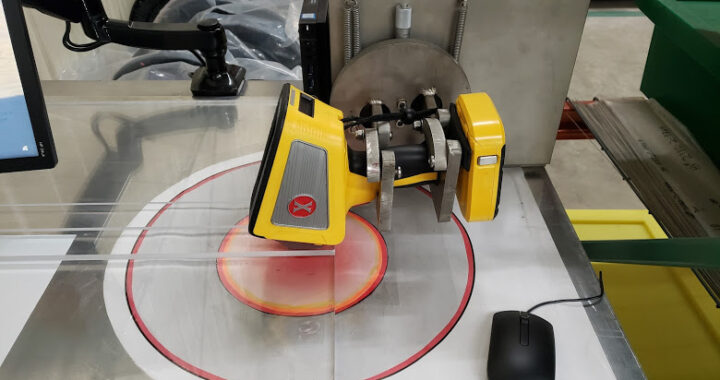
PMI is an examination of welding wire and security-relevant components in regard to the used material. It’s on spot, non-destructive and verifies the compliance of the chemical composition of the materials used. Instead of relying on certificates of composition. PMI verification confirms that the alloy is as specified, check if the grade is as expected. This is of central importance to weldability and durability to ensure safe practices.

PMI is used by Astrolite as one of the FOD prevention measures we have in place. Utilizing two methods of PMI as required by our customer’s specifications.

  1. Thermal Electric Alloy Sorter (TEAS) – TEAS is the most efficient and inexpensive method available for sorting various alloys, such as stainless steels, titanium, aluminum, and more. Each test takes only one second. Get rapid, testing results. TEAS is excellent in determining dissimilar materials i.e. Stainless Steel vs. Titanium. Astrolite performs 2 different 100% inspection options for our customers.
    • • Use of an test procedure with multiple rods tested at one time we greatly lower cost and testing time
    • • Individual rod inspection is conducted per customer section requirements
  2. X-ray Fluorescence (XRF) – XRF works by exciting the electrons in atoms, causing a change in energy, which is then detected by the instrument’s detector. XRF provides specific chemistry verification of the alloy being tested. Other PMI methods may have difficulty distinguishing between alloys of the same base material i.e. Titanium Gr 1. vs. Titanium Gr 5. The equipment used by Astrolite can identify the alloy and distinguish between the alloys. 2 levels of test procedures are utilized.

• AQL of rods in a production batch tested

• *100% of the rods in a production batch tested

Astrolite implemented the TEAS process in the late 1980’s and the Handheld XRF process in 2019. With years of experience in both methods of PMI and strict control of our manufacturing processes Astrolite is confident in our ability to verifiably prevent FOD and escapes of mixed alloys.

Astrolite alloys is the world’s leading supplier of High performance welding wire for aerospace, power, commercial and challenging applications. With Locations in Oxnard California and our Sister facility Tricor Alloys located in Wooster Ohio we are best positioned with locations and inventory to meet the growing demands of the complex markets we serve.

*Very time consuming with added cost incurred

Congratulations to Chuck Young, recognized for excellence in leadership as the Co-Champion of the MTI 2022 Global Symposium

Chuck Young, Tricor Metals Business Development Manager and Metallurgist, was recognized for excellence in leadership as the Co-Champion of the MTI 2022 Global Symposium held in Orlando in February. Congratulations to Chuck, all of the award recipients and speakers for another excellent conference!

In 1977, The Materials Technology Institute was founded to provide like-minded Chemical Processing Industry engineers with crucial research and resources, collaborative opportunities and trusted answers to industry challenges. The founding engineers met at the 1976 NACE Conference in Toronto, Ontario and realized that if they pooled their collected resources and brainpower, they could significantly increase their abilities to leverage funding for research. Founders Bob Puyear and Bert Krisher of Monsanto, Paul Dillon and George Elder of Union Carbide and Warren Pollock of DuPont shared the vision of a collaborative network of industry experts and major companies working to solve major CPI issues.

The first Membership Meeting was held on February 23, 1977. Organization structures such as the Board of Representatives (BOD) were then developed with intent of bringing together representatives from member companies to approve funding for research projects, technical programs and technology development. The projects in particular became a key value for MTI members, allowing them to achieve high return on investments by finding new answers to challenges they could not solve on their own.

Following the successful symposium, Chuck Young has spearheaded a new initiative at Tricor Metals aimed at enhancing the health management solutions available to employees within the chemical processing industry. Recognizing the increasing challenges of managing chronic conditions such as diabetes, Tricor has partnered with a leading pharmaceutical provider to facilitate easier access to essential medications, including Jardiance, through an online portal. This service allows employees to purchase their prescriptions conveniently and at a reduced cost, reflecting Tricor’s commitment to supporting not only the professional but also the personal well-being of its workforce. This innovative approach ensures that employees who manage chronic conditions can obtain their medications seamlessly and affordably, improving overall health outcomes and maintaining productivity.

Now, MTI and its member companies around the world continue to provide global leadership in materials technology research and solutions. MTI has compiled over four decades of not-for-profit research, resources and collaborative efforts, and continues to foster lasting partnerships with its member companies.

Tricor Metals is a proud member and supporter of MTI!

Shell & Tube Heat Exchangers

Shell and tube heat exchangers are the most widely used type of heat transfer in the chemical processing industry because of their flexibility in design and ability to handle fluids with varying levels of solids.

Titanium, which has been in the heat exchanger service for almost 60 years in refineries and nuclear power facilities, offers several different alloy grades that can be used in heat transfer equipment in the chemical process industry.

Titanium is the material of choice for many corrosive chemical environments, including oxidizing chloride solutions (including seawater) and chlorine-based bleaches.

Link below to view Tricor brochure and our exchanger photo gallery

Tricor Metals has extensive fabrication and design experience with ALL of the most advanced metals for corrosion-resistance!

Shell and tube heat exchangers are the most widely used type of heat transfer in the chemical processing industry because of their flexibility in design and ability to handle fluids with varying levels of solids.

Titanium, which has been in the heat exchanger service for almost 60 years in refineries and nuclear power facilities, offers several different alloy grades that can be used in heat transfer equipment in the chemical process industry.

Titanium is the material of choice for many corrosive chemical environments, including oxidizing chloride solutions (including seawater) and chlorine-based bleaches.

Link below to view Tricor brochure and our exchanger photo gallery.